Anna Neumann · 8 October 2026
Charting Transformations in Artisan Networks Across the Caleno Region
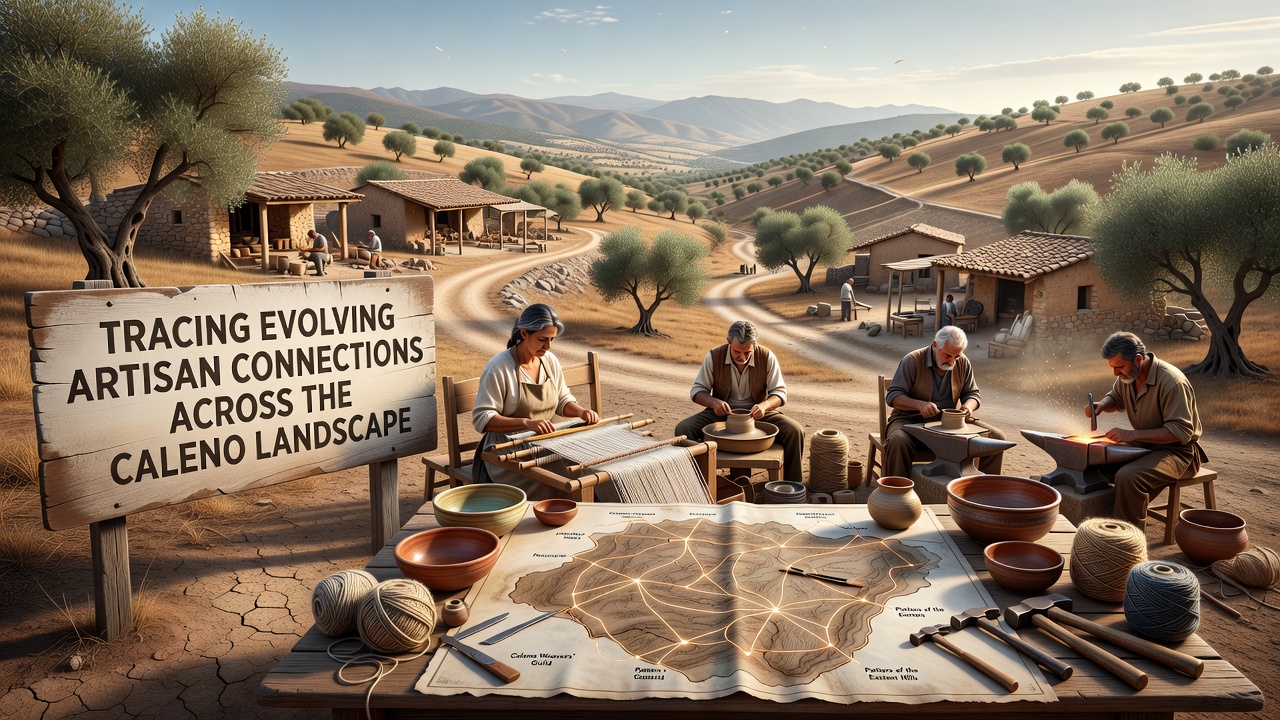
Researchers have mapped how artisan groups in the Caleno region maintain and adjust their collaborative ties over decades, and data from regional surveys shows these connections shift in response to economic pressures, material availability, and technological access. Studies conducted by the European Institute for Cultural Heritage indicate that networks linking potters, weavers, and metalworkers have expanded since the early 2000s, while older family-based clusters have merged with newer cooperatives to share resources and distribution channels. Figures from the 2024 Caleno Regional Artisan Census reveal that 62 percent of active workshops now participate in at least three cross-village partnerships, compared with 41 percent recorded in 2015.
Historical Patterns and Recent Adjustments
Archaeological records combined with oral histories document that artisan connections in this area once followed seasonal trade routes along river valleys, and those routes still influence modern logistics even as paved roads and digital platforms alter delivery timelines. Observers note that during the 1990s many independent makers relied on direct handoffs at seasonal markets, whereas today's arrangements include shared online inventories and joint material procurement contracts. A 2023 report issued by the Australian Centre for Regional Arts found similar patterns in comparable landscapes, where geographic proximity continues to shape trust between workshops despite the rise of virtual coordination tools.
Role of Digital Platforms in Network Growth
Since 2018, several open-source mapping projects have documented real-time changes in how artisans locate suppliers and collaborators, and these platforms allow users to trace material flows from quarry to finished product across multiple municipalities. Data compiled by the University of Toronto's Heritage Innovation Lab shows that adoption of shared inventory software increased inter-workshop exchanges by 37 percent between 2019 and 2024. Yet many older practitioners continue to favor in-person negotiations for high-value commissions, creating hybrid systems that blend physical visits with digital record-keeping. One case study from the village of San Pietro illustrates how a collective of woodcarvers expanded its client base after joining a regional database that lists available stock and skill specialties.
Material Sourcing and Alliance Shifts
Changes in clay, fiber, and metal supply chains have prompted new alliances, and recent geological surveys indicate that certain local quarries face depletion while others remain viable. Artisans have responded by forming purchasing groups that negotiate bulk rates with distant suppliers, according to records maintained by the Caleno Chamber of Craft Industries. These groups often overlap with training programs that rotate apprentices between sites, thereby strengthening personal relationships that underpin larger commercial ties. In October 2026 the Caleno Artisan Mapping Initiative plans to release an updated interactive atlas that will incorporate satellite imagery and supply-chain timestamps, giving researchers finer detail on how these sourcing patterns evolve month to month.
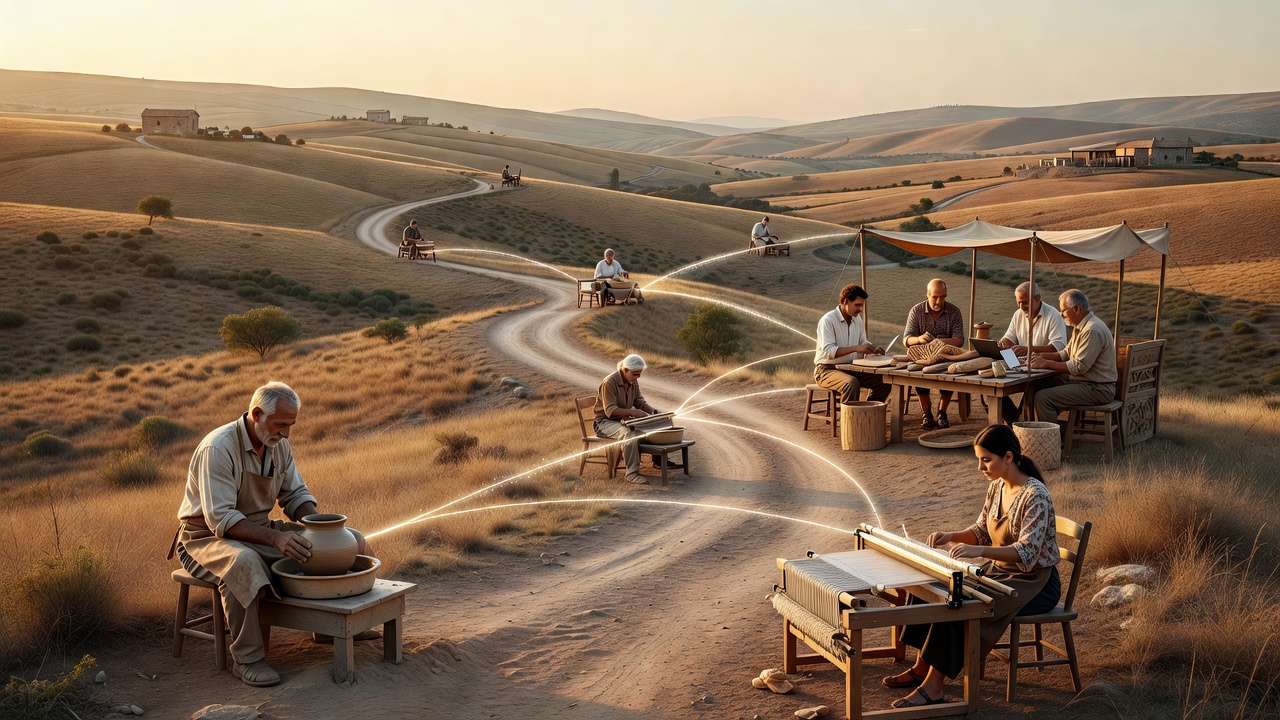
External funding from the European Regional Development Fund has supported several of these mapping efforts, and grant reports list measurable increases in documented partnerships among previously isolated makers. Similar programs administered through Canadian provincial heritage offices have produced comparable datasets, allowing cross-continental comparisons of network resilience under fluctuating market conditions.
Training and Knowledge Transmission
Apprenticeship pathways have lengthened as workshops specialize, and young artisans now often complete rotations at three or more locations before establishing their own practice. Records kept by the Caleno Craft Education Board show that enrollment in multi-site training programs rose from 128 participants in 2017 to 214 in 2025. These extended pathways create redundant connections that persist after formal training ends, because participants maintain contact through alumni networks and joint exhibition opportunities. Researchers at the University of Melbourne's Cultural Mapping Unit have noted parallel developments in other Mediterranean-style landscapes, where knowledge circulation strengthens overall sector adaptability.
Conclusion
Comprehensive tracking of artisan connections across the Caleno region continues to rely on combined methods that merge field surveys, digital logs, and historical archives. The resulting datasets provide clear evidence of expanding, overlapping, and occasionally contracting networks that respond to both local conditions and wider economic signals. As the October 2026 atlas update approaches, additional layers of information will become available for ongoing analysis of how these relationships shape craft production and regional identity.