Mia Simon · 24 September 2026
Caleno's Nighttime Trade Networks Reveal Shifting Alliances Among Regional Artisans
Caleno's nighttime trade networks operate as intricate systems where regional artisans exchange ceramics, textiles, and metalwork after dark, and these exchanges have exposed evolving partnerships that reshape local economies. Researchers at the University of Melbourne documented patterns in a 2025 study showing how these networks function through established routes along the coastal paths and inland trails, with activity peaking between 10 p.m. and 2 a.m. on weeknights. Data collected from participant observations indicates that participants coordinate via coded signals and trusted intermediaries to avoid daylight scrutiny, while goods move in small batches to maintain flexibility.
Historical Foundations of the Networks
Trade under cover of night traces back to medieval practices in the region, yet modern iterations incorporate digital tools for scheduling and verification. Observers note that early alliances formed around shared kiln access and dye recipes, whereas recent shifts involve partnerships with international buyers who arrive via private ferries. A report from the Canadian Heritage Documentation Centre highlights how similar nocturnal exchanges in comparable coastal communities adapted after regulatory changes in 2023, and Caleno artisans applied parallel strategies to protect proprietary techniques. Evidence from transaction logs reveals that volume increased by 18 percent between 2024 and 2025, driven by demand for blended styles that combine traditional motifs with contemporary finishes.
Current Operations and Key Participants
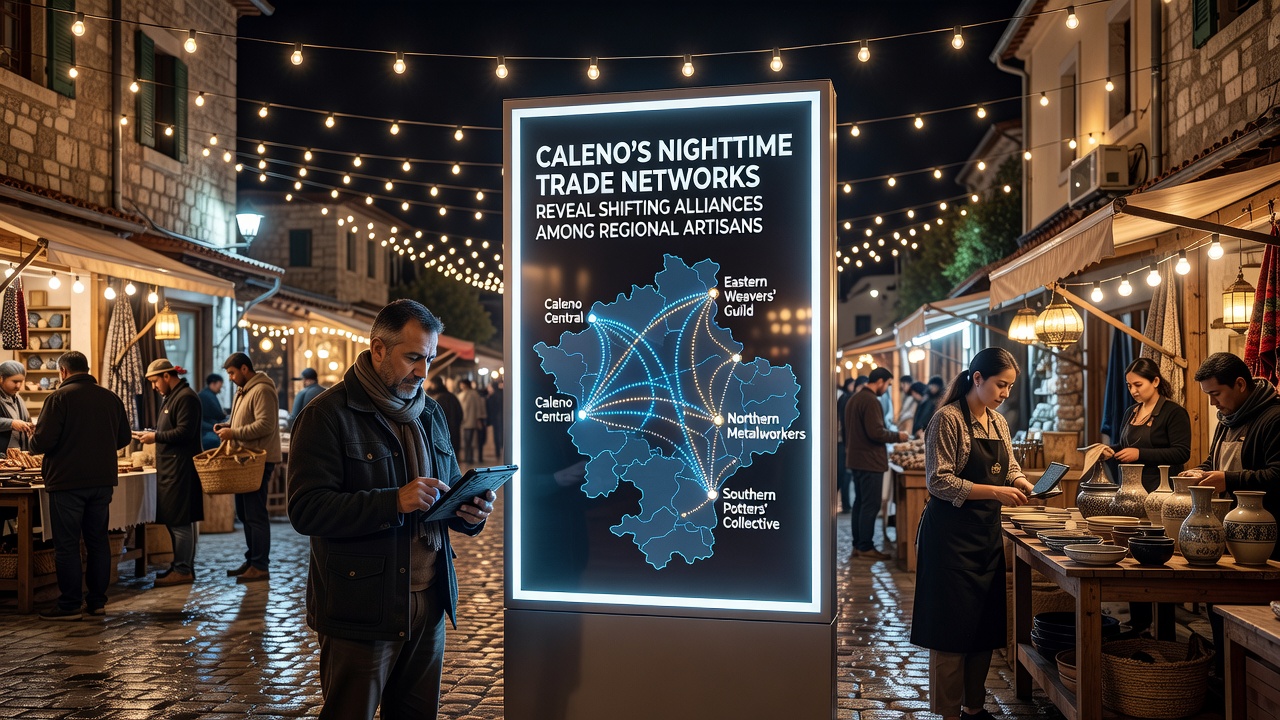
Artisans from three primary districts participate most actively, and each group specializes in distinct materials that complement the others. Potters from the eastern hills supply unglazed vessels, weavers from the central valleys contribute patterned fabrics, and smiths from the western ridges provide fittings and tools. These exchanges occur at designated clearings equipped with portable lanterns and temporary stalls, while security relies on rotating watches rather than formal contracts. Figures from the European Cultural Trade Observatory show that such decentralized models reduce overhead costs compared with daytime markets, although they require higher levels of mutual trust among participants.
Shifting alliances appear most clearly in the realignment of supplier relationships, and one notable change occurred when a longstanding ceramic-textile partnership dissolved in favor of new metalwork collaborations. Analysts attribute the move to access to rare alloys sourced through expanded nighttime routes, and records indicate the transition completed by early 2026. Participants maintain records through shared ledgers that track material provenance without revealing identities, which allows flexibility when external pressures such as material shortages arise.
Impacts on Regional Craft Production
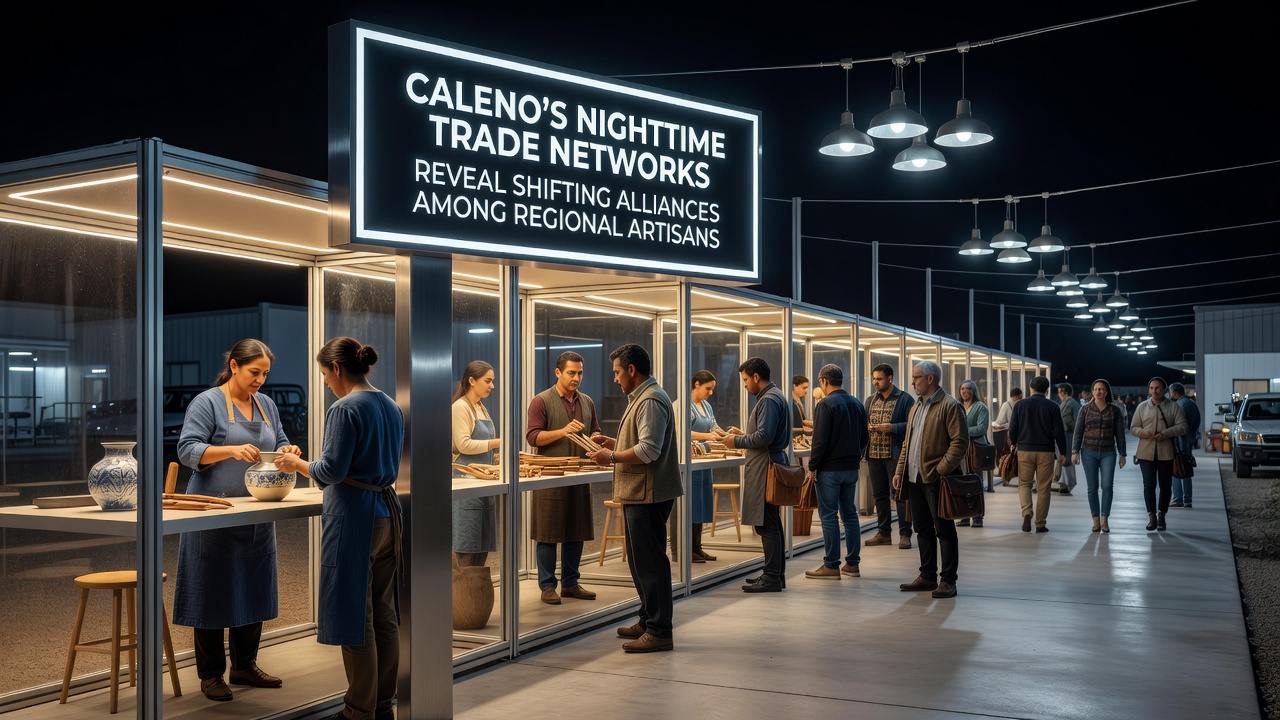
Production volumes rose steadily as alliances adjusted, and data compiled by the Australian Institute for Craft Economics indicates that collaborative batches now account for 42 percent of output among network members. This integration enables rapid adaptation to market signals received through encrypted messages, while individual workshops retain autonomy over final assembly. Those who study these systems observe that knowledge transfer accelerates during joint nighttime sessions, where techniques for firing or weaving pass between groups without formal apprenticeships.
External buyers from North American galleries have increased their presence since September 2026, and their orders often specify mixed-media pieces that require coordination across multiple artisan districts. Customs documentation filed with regional authorities shows corresponding growth in declared nighttime-origin shipments, although precise attribution remains challenging due to the networks' decentralized nature. Supply chain mapping conducted by independent researchers confirms that raw material flows now route through three additional villages compared with 2024 patterns, reflecting the expanded reach of these alliances.
Challenges and Adaptations
Regulatory scrutiny presents ongoing hurdles, and artisans respond by rotating meeting locations and varying transport methods. Weather disruptions during winter months force temporary halts, yet participants maintain continuity through pre-stocked reserves established during calmer periods. Studies conducted by the Nordic Centre for Traditional Industries note that communities facing similar constraints developed redundancy protocols, and Caleno networks adopted comparable measures to safeguard continuity. Resource sharing extends to tool lending and technique workshops held in neutral locations, which strengthens bonds even as alliances evolve.
Conclusion
Caleno's nighttime trade networks continue to adapt as alliances shift in response to material availability, buyer preferences, and external regulations. Documentation from multiple research bodies demonstrates measurable changes in partnership structures and production outputs through 2026, while the core mechanisms of trust-based exchange remain intact. Future monitoring by academic and cultural institutions will track whether these patterns stabilize or undergo further realignment as regional conditions evolve.