Wendy Beck · 22 October 2026
Archival Discoveries Transform How Caleno Musicians Fuse Historical Trade Routes Into Modern Soundscapes
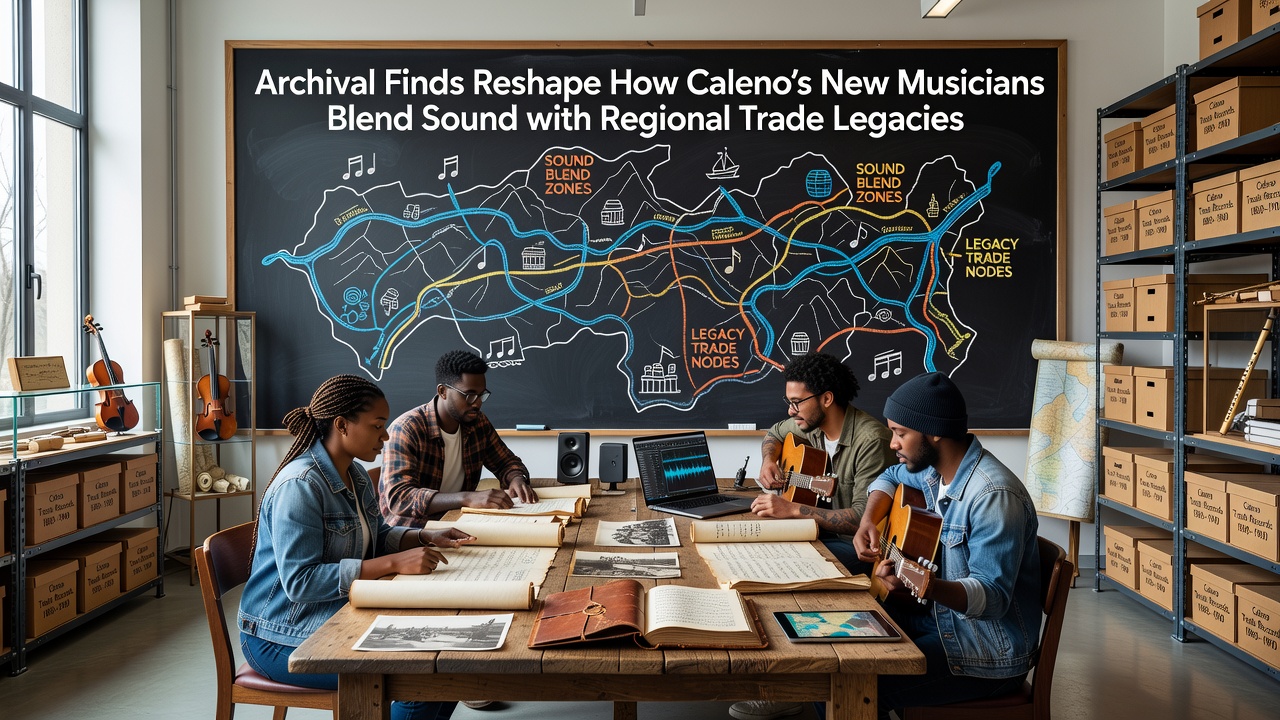
Recent archival discoveries in regional repositories have begun to alter the creative approaches taken by emerging musicians across the Caleno area, where centuries-old trade records now inform new compositions that merge traditional sonic elements with contemporary production techniques. These documents, many dating from the 1600s through the 1800s, outline merchant pathways that linked local artisans to ports in the Mediterranean and beyond, and musicians have started mapping those routes onto rhythmic structures and instrumentation choices.
Trade Records Reveal Layered Exchange Networks
Historians working with local collections identified ledgers and correspondence that detail shipments of textiles, spices, and metals passing through Caleno markets, and these materials show how artisans exchanged not only goods but also musical motifs carried by traveling performers. Data from digitized inventories indicate that certain percussion patterns arrived via overland caravans while string techniques entered through coastal vessels, creating hybrid forms that persisted in folk practices until the mid-20th century. Researchers at institutions studying Mediterranean commerce have cross-referenced these findings with similar archives held in northern European collections, confirming patterns of cultural diffusion that extended farther than previously mapped.
One set of manuscripts uncovered in late 2025 describes payments made to itinerant musicians who accompanied spice traders, and these notations include rudimentary transcriptions of melodies that match fragments still performed at seasonal gatherings. Such evidence has prompted sound engineers and composers to experiment with microtonal scales derived from those records, layering them over electronic beats that reference modern logistics corridors.
Musicians Incorporate New Source Material
Young artists in Caleno studios have responded to these archival releases by revising their songwriting processes, incorporating field recordings of market sounds captured along reconstructed trade paths and sampling archival vocal inflections preserved in wax cylinder collections. Groups that once focused solely on electronic genres now weave in modal progressions traced to 18th-century merchant songs, producing tracks that circulate on regional platforms and attract listeners interested in both heritage and innovation. Observers note that rehearsal sessions frequently reference specific ledger entries when deciding on tempo shifts, treating commercial transaction dates as structural markers within longer pieces.
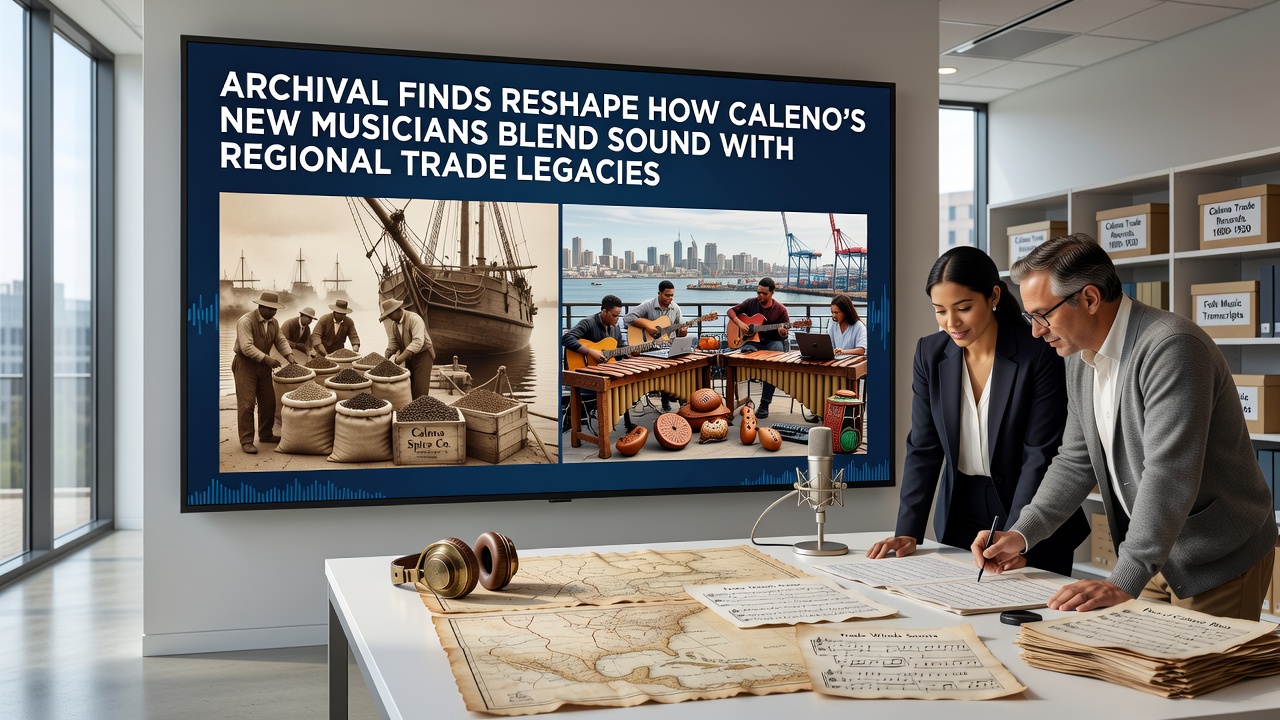
Performances scheduled for October 2026 will showcase these integrations at venues located near former trading posts, where set lists draw directly from route maps rather than standard set orders. Bands prepare by aligning chord changes with the geography described in the documents, so that a piece might transition from a slow, caravan-like rhythm to a brisk port-town cadence as the narrative moves along the historical path. Sound designers have begun collaborating with cartographers to spatialize these elements in live mixes, placing speakers to simulate directional movement across a stage.
Collaborations Between Disciplines Expand
University programs focused on ethnomusicology have partnered with digital humanities labs to create open-access databases that tag trade-related musical references, allowing composers to query specific commodities or destinations and retrieve associated sonic markers. These tools have accelerated the pace at which new works emerge, since creators can now isolate a single ledger line describing a lute shipment and immediately locate matching audio fragments from later recordings. Funding from regional cultural agencies supports these initiatives, which also train apprentices in both archival handling and music software.
Case examples include an ensemble that reconstructed a multipart song from merchant diaries and released it alongside an interactive map showing the exact stops where each verse originated, and another project that converted customs stamps into percussive triggers within a modular synthesizer setup. Such approaches demonstrate how primary sources move beyond academic study and into active creative pipelines without requiring performers to abandon current production standards.
Conclusion
Archival materials continue to surface in Caleno repositories, supplying additional details about the economic and artistic exchanges that once defined the region, and musicians integrate these details into evolving repertoires that connect past networks with present-day distribution channels. The October 2026 events will serve as public demonstrations of this ongoing synthesis, offering audiences direct encounters with both the documents and the resulting sound works. Further cataloguing efforts promise additional source material that may refine current practices while expanding the range of available references for future compositions.